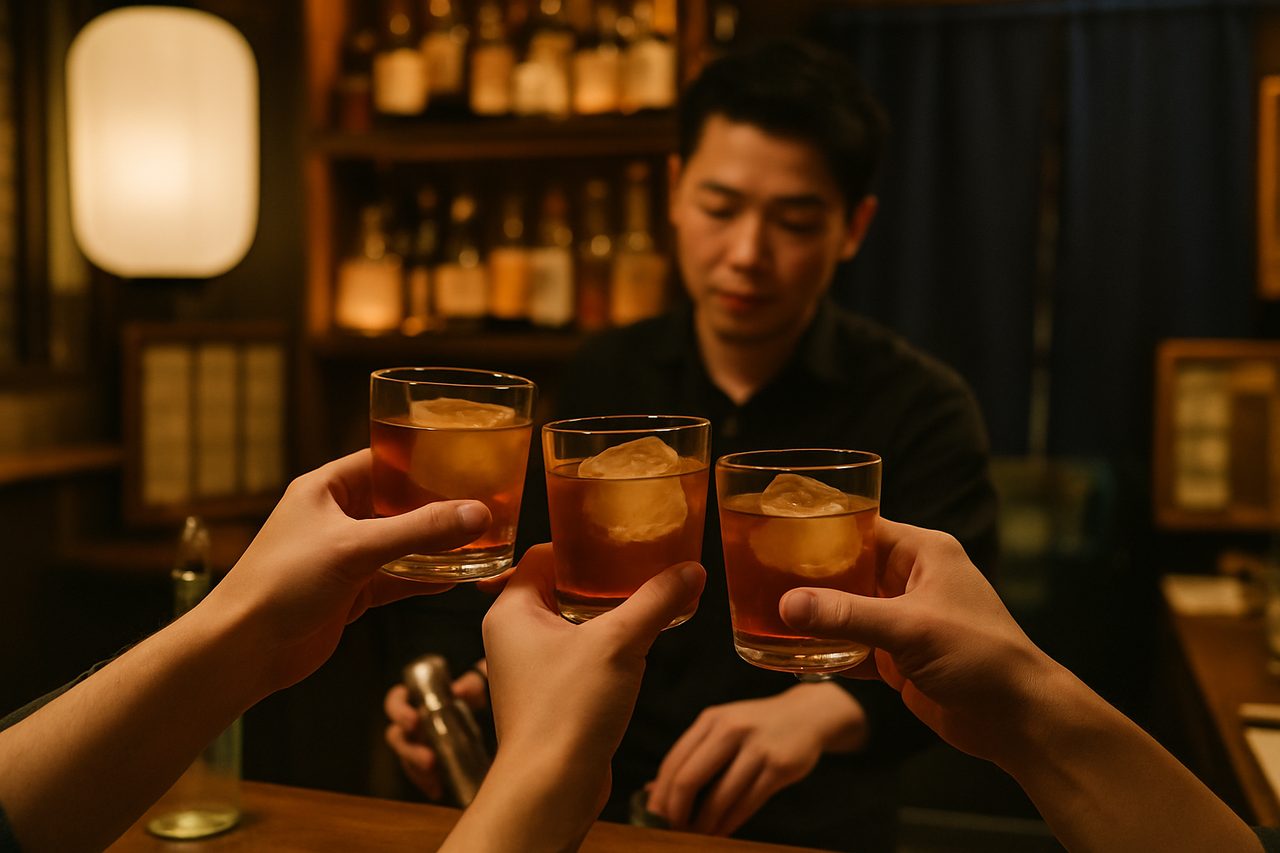
Why a Bar Crawl Is a Great Way to Experience Tokyo Nightlife
Tokyo's after-dark scene is dense, varied, and often hidden behind unmarked doors or up narrow staircases. A bar crawl lets you sample several venues in one night, moving from a lively izakaya to a quiet cocktail counter, and perhaps a close-up magic bar in between. Rather than committing an entire evening to one spot, you get a broader taste of the city's range. This guide walks through the practical steps of planning a crawl that flows well and matches your interests.
Choose Your Neighborhood First
Tokyo nightlife is spread across distinct districts, each with its own character. Deciding where to base your crawl helps you keep travel time short and your energy focused.
Roppongi nightlife is known for its international crowd, a mix of bars and clubs, and venues that stay open late. It suits visitors who want variety within walking distance and a scene that welcomes English speakers. Shinjuku's Golden Gai offers a cluster of tiny, atmospheric bars packed into a few narrow lanes, while Shibuya leans younger and busier. Ginza tends toward polished, higher-priced cocktail bars. Picking one area, or two that sit close together, reduces the need for long train rides between stops.
Map a Logical Route
Once you have a district, sketch a rough order for the night. A common approach is to start with something casual and food-focused, then move toward more specialized or intimate venues as the evening progresses. Beginning at an izakaya gives you a base of food before drinking, which helps pace the night. From there you might move to a dedicated cocktail bar, then finish somewhere memorable.
Keep walking distances between venues under about ten minutes where possible. Group nearby bars together and check closing times in advance, since some smaller spots close earlier than large ones. Building in a little flexibility lets you linger somewhere you enjoy or leave a place that isn't a fit.
Consider Adding a Close-Up Magic Bar
Close-up magic bars are a distinctive part of Tokyo's nightlife, particularly in and around Roppongi. At these venues, a magician performs card tricks, coin routines, and other sleight-of-hand directly at the bar or table, often just a few feet from you. The intimate format makes them well suited to a crawl, since you can drop in for a drink and a performance without committing to a full show.
Many of these bars charge a table or seating fee in addition to drinks, so it helps to check pricing and whether reservations are needed before you go. Some seat only a handful of guests at a time, which can mean a wait during busy hours. Placing a magic bar mid-crawl, rather than at the very end, can be a good idea if you want to catch a performance while the venue still has open seats.
Set a Realistic Budget
Costs vary widely across Tokyo's bar types. Casual izakaya and standing bars are generally more affordable per drink, while dedicated cocktail bars, hotel bars, and specialty venues sit at higher price points. Be aware that some establishments add a cover charge (often called a table charge or otoshi seat fee), which may include a small appetizer. This is a normal practice rather than a hidden fee, but it can add up across several stops.
Decide roughly how much you want to spend for the night and how many venues that allows. Carrying some cash is sensible, as smaller bars may not accept cards, though card acceptance is increasingly common in larger and more tourist-oriented spots.
Plan Your Timing and Transport
Most bars in Tokyo fill up later in the evening, and many stay open past midnight. However, the train and subway systems typically stop running around midnight to just after, so plan how you'll get home. Options include timing your last venue to finish before the final train, taking a taxi, or choosing accommodation within walking distance of your crawl area. Roppongi and similar districts have taxis available late at night, though fares rise after midnight.
Starting your crawl in the earlier evening gives you more time and more transport flexibility, while a later start leans into the livelier, more crowded atmosphere many venues develop as the night goes on.
Practical Etiquette and Tips
A few customs help a night go smoothly. Some smaller bars operate on a members-or-regulars basis and may politely turn away walk-ins; this is not personal, and there are plenty of welcoming alternatives nearby. Tipping is not expected in Japan, so there's no need to add gratuity. Keep noise levels reasonable in intimate venues, and if a bar has limited seating, be mindful of how long you stay when others are waiting.
It also helps to have a translation app or the venue's name saved in Japanese, since some entrances are unmarked or signed only in Japanese. Checking recent opening hours online before you set out avoids arriving at a closed door.
Build in Room for Discovery
While a plan keeps your night efficient, some of the most memorable moments in Tokyo nightlife come from wandering into an unplanned spot. Leaving one open slot in your route lets you follow a recommendation from a bartender or explore a promising side street. Balancing structure with spontaneity tends to produce a crawl that feels both smooth and genuinely enjoyable.
Putting It All Together
A well-planned Tokyo bar crawl comes down to a few decisions: choose a district such as Roppongi, map a walkable route, set a budget that accounts for cover charges, and plan your transport around late-night train schedules. Adding a close-up magic bar or another specialty venue can turn an ordinary night out into something distinctive. With a loose framework in place and a little flexibility, you can experience a real cross-section of the city's after-dark culture in a single evening.