A Guide to Tokyo's Nightlife in Ueno: Ameyoko Alley Bars, Late-Night Yakitori, and Retro Drinking Spots After Dark
Why Ueno Deserves a Spot on Your Tokyo Nightlife Map
When people talk about Tokyo nightlife, the conversation often jumps straight to Golden Gai in Shinjuku or the polished cocktail bars of Ginza. Ueno tends to be overlooked, remembered mainly for its museums, its park, and its busy train station. Yet after dark, the area around Ueno Station transforms into one of the city's more down-to-earth drinking districts, where standing bars, smoky yakitori counters, and retro izakaya line the streets and railway underpasses.
Ueno's appeal is its unpretentious character. Prices tend to run lower than in Shinjuku or Roppongi, the crowd is a mix of after-work locals and curious travelers, and much of the drinking happens in the open air. If you want a taste of everyday Tokyo nightlife rather than a curated tourist experience, Ueno is an easy and rewarding place to spend an evening.
Ameyoko Alley After Dark
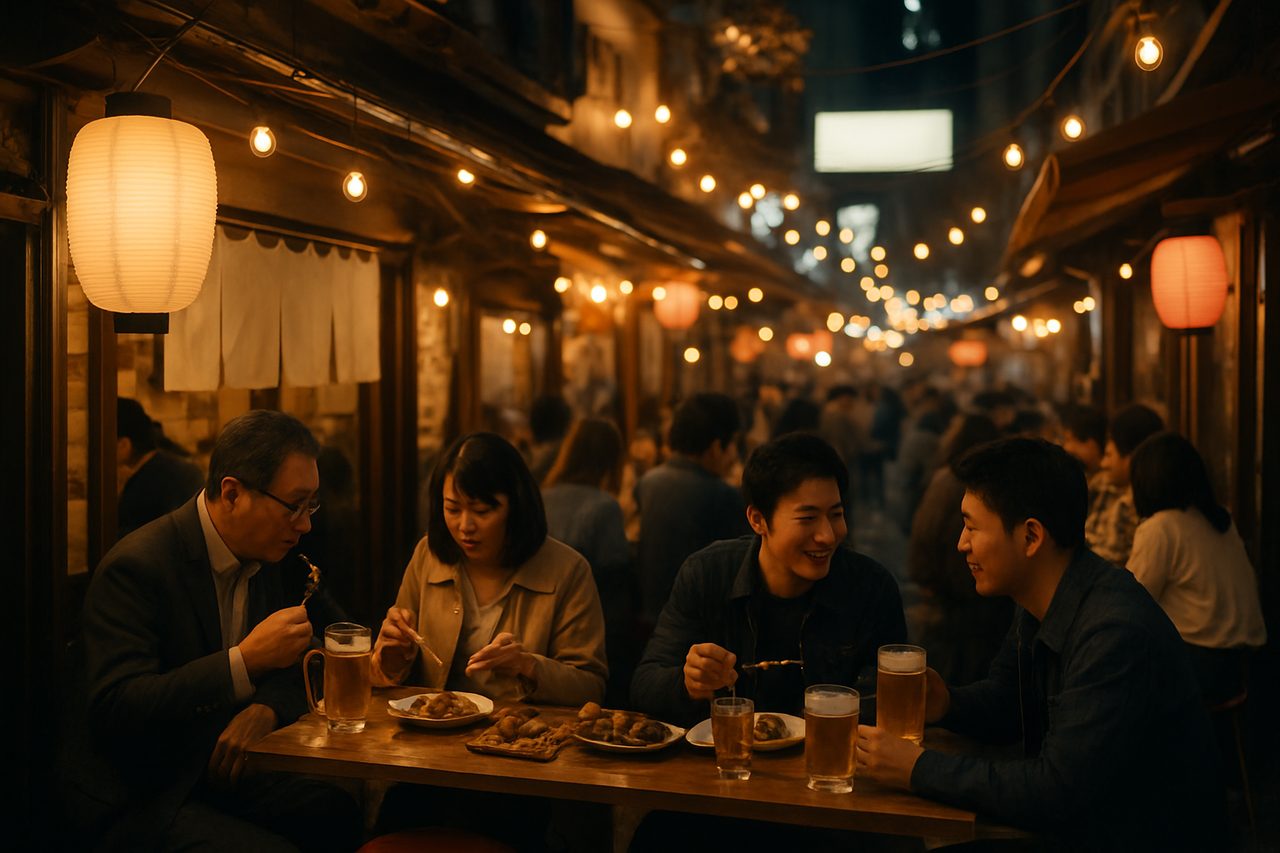
Ameyoko, short for Ameya-Yokocho, is the market street that stretches between Ueno and Okachimachi stations. By day it is packed with vendors selling seafood, dried goods, cheap clothing, and cosmetics. As the shops begin to close in the early evening, the same narrow lanes fill with drinkers pulling up plastic stools at open-fronted bars.
Many of these spots serve inexpensive draft beer, chuhai, and quick dishes such as grilled seafood, stewed offal, and Chinese-style small plates. The atmosphere is casual and noisy, with strangers often ending up shoulder to shoulder at shared counters. It is a good environment for solo travelers, since staff and neighboring drinkers are generally used to a steady flow of visitors. Cash is still king at many of these stalls, so it is worth carrying some yen.
Late-Night Yakitori Under the Tracks
Some of Ueno's most memorable eating and drinking happens beneath the elevated railway lines. Here you will find yakitori counters where charcoal grills send up smoke and the sound of trains rumbles overhead. Yakitori—skewered and grilled chicken—pairs naturally with cold beer or a highball, and ordering is straightforward: point at what looks good or ask for the recommended set.
Beyond chicken, many of these places also grill pork skewers, vegetables, and other seasonal items. Portions are small and affordable, which makes it easy to try several types across an evening. If you are visiting in warmer months, look for counters that spill out onto the pavement, where the informal, open-air setting captures the everyday rhythm of Tokyo nightlife.
Retro Drinking Spots and Kissaten Vibes
Ueno also holds on to an older, mid-20th-century atmosphere that has faded in flashier parts of the city. Tucked into side streets are retro snack bars, standing bars, and long-running izakaya with worn wooden interiors and handwritten menus. Some establishments have operated for decades, and their regulars give them a settled, neighborly feel.
For a quieter interlude, the area's kissaten—traditional Japanese coffee shops—offer a slower pace. While many close before late night, a few stay open into the evening and serve coffee, light meals, and sometimes alcohol in a calm, nostalgic setting. Alternating between a lively yakitori counter and a hushed kissaten is a good way to experience the range of moods Ueno has to offer.
How Ueno Compares to Golden Gai in Shinjuku
Golden Gai in Shinjuku is perhaps the most famous small-bar district in the city, known for its cluster of tiny themed bars packed into a few narrow lanes. It is atmospheric and distinctive, but it can also feel crowded, and some bars charge cover fees or cater heavily to visitors.
Ueno offers a different experience. Where Golden Gai is dense and vertical, with bars stacked into cramped multi-story buildings, Ueno's nightlife spreads out along market streets and under railway arches. Prices in Ueno are often lower, cover charges are less common at open-air stalls, and the crowd leans more toward local after-work drinkers. Neither is objectively better; the right choice depends on what you want. Choose Golden Gai for concentrated character and novelty, and choose Ueno for affordable, unfussy drinking with a neighborhood feel.
Practical Tips for a Night Out in Ueno
Ueno Station is a major hub served by several JR lines and the Tokyo Metro, making it easy to reach and easy to leave. Most casual drinking gets going in the early evening, and while some stalls in Ameyoko wind down earlier than bars elsewhere, plenty of yakitori spots and izakaya stay open late into the night.
Carry cash, as smaller establishments may not accept cards. If you are ordering at a standing bar, be prepared for limited English at some counters—pointing and simple phrases go a long way. Keep an eye on the last train times if you are relying on public transport, and pace yourself across a few spots rather than settling in at just one. Approached this way, Ueno makes for one of the more relaxed and authentic corners of Tokyo nightlife.