Tokyo nightlife · Shibuya
Shibuya After Dark
The beating heart of young Tokyo — a scramble of screens, music and late nights. Here's how Shibuya became Shibuya, and where its close-up magic scene fits in.
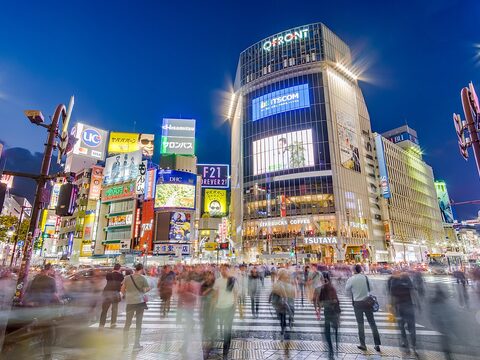
The story of Shibuya
From Samurai Fief to the Heart of Young Tokyo
Shibuya did not begin as a city center at all — it began as a fief. Its name comes from the Shibuya clan, warriors descended from Taira no Yoshifumi who took possession of the area in the early 1160s and held it until the Later Hojo clan defeated them in 1524. Through the Edo period the district stayed peripheral, though Maruyamacho on the Dogenzaka slope prospered as a stop on the Oyama Road. In the Meiji era that same quarter matured into a hanamachi, a licensed geisha entertainment district — the deep root of Shibuya's after-dark identity. The hills west of the station were an entertainment zone long before neon and nightclubs ever arrived.
The turning point was rail. Shibuya Station opened in 1885 on the Yamanote loop, and the district was incorporated as a ward of Tokyo on October 1, 1932. That same year the Tokyu Toyoko Line made Shibuya a terminal between Tokyo and Yokohama, joined by the forerunner of the Keio Inokashira Line in 1933 and the Ginza subway line in 1938. A convergence of commuter lines turned an ordinary station town into one of Tokyo's great transfer hubs. It was here, amid that daily human tide, that the Akita dog Hachiko waited for his deceased owner, Professor Hidesaburo Ueno, from 1925 until his own death in 1935. A bronze statue erected in 1934 and its postwar replacement in 1948 made the Hachiko Exit the city's most famous meeting point and a national emblem of loyalty.
Shibuya's modern character crystallized in the 1970s, when it overtook Shinjuku as Tokyo's hub of youth culture. The engine was a commercial rivalry: the Seibu group, which built Shibuya Parco (opened 1973), against Tokyu, which built Shibuya 109 (opened April 1979) and Tokyu Hands. Each raced to capture young shoppers. The 1973 inauguration of the Scramble Crossing gave the district its defining image, and decades later, in November 2019, the opening of Shibuya Scramble Square with its 229-meter Shibuya Sky observation deck signaled a new era of large-scale redevelopment. What was once a rural clan holding is now a ward of roughly 230,000 residents and a global shorthand for the Tokyo of youth, retail, and spectacle.
After dark
How Shibuya Became Tokyo's Nightlife Capital
Shibuya's nightlife grew out of the very same hillside that once held its Meiji-era geisha quarter. The Dogenzaka and Maruyamacho slopes above the station remain the district's entertainment spine, and it was there — as youth culture concentrated in Shibuya through the 1970s and 80s — that a distinctive after-dark ecosystem took shape. The Scramble Crossing (1973) and the surrounding wall of screens and signage gave the area a permanently electric, cinematic quality at night, an image that films like 'Lost in Translation' (2003) exported worldwide.
The scene's cultural high-water mark came through music. In the late 1980s and early 1990s Shibuya birthed Shibuya-kei, a magpie microgenre that spliced 1960s pop, bossa nova, lounge and jazz into a knowing cut-and-paste sound. Crucially, it was built on the district's retail geography: the density of import record shops made it possible. HMV Shibuya (opened 1990), Tower Records, Manhattan Records and Wave were not just stores but tastemaking hubs, reportedly accounting for more than half the sales of early acts like Flipper's Guitar, Pizzicato Five and Cornelius. Small clubs and DJ bars sprouted alongside them, while the fashion side of the same youth wave crystallized at Shibuya 109, which by the late 1990s had become the commercial engine of gyaru (gal) street style.
From the 1990s into the 2010s Shibuya was defined by large, serious clubs, with Maruyamacho anchoring the electronic scene: WOMB, running since 2000, remains one of Tokyo's most respected electronic venues, alongside spaces like Sound Museum Vision and Contact. That model was disrupted from 2020 onward, when the COVID-19 pandemic combined with an aggressive redevelopment wave to shutter beloved venues — in September 2022 both Vision and Contact closed as their Dogenzaka buildings were demolished. The response has been a pivot toward intimate 'ko-bako' venues of roughly 100 to 200 capacity, prizing experimental bookings and closeness over scale. Shibuya's nightlife today is smaller-grained and more personal than at its peak, even as the district around it climbs skyward.
A uniquely Tokyo night
The Japanese Magic Bar: Close-Up Wonder at the Counter
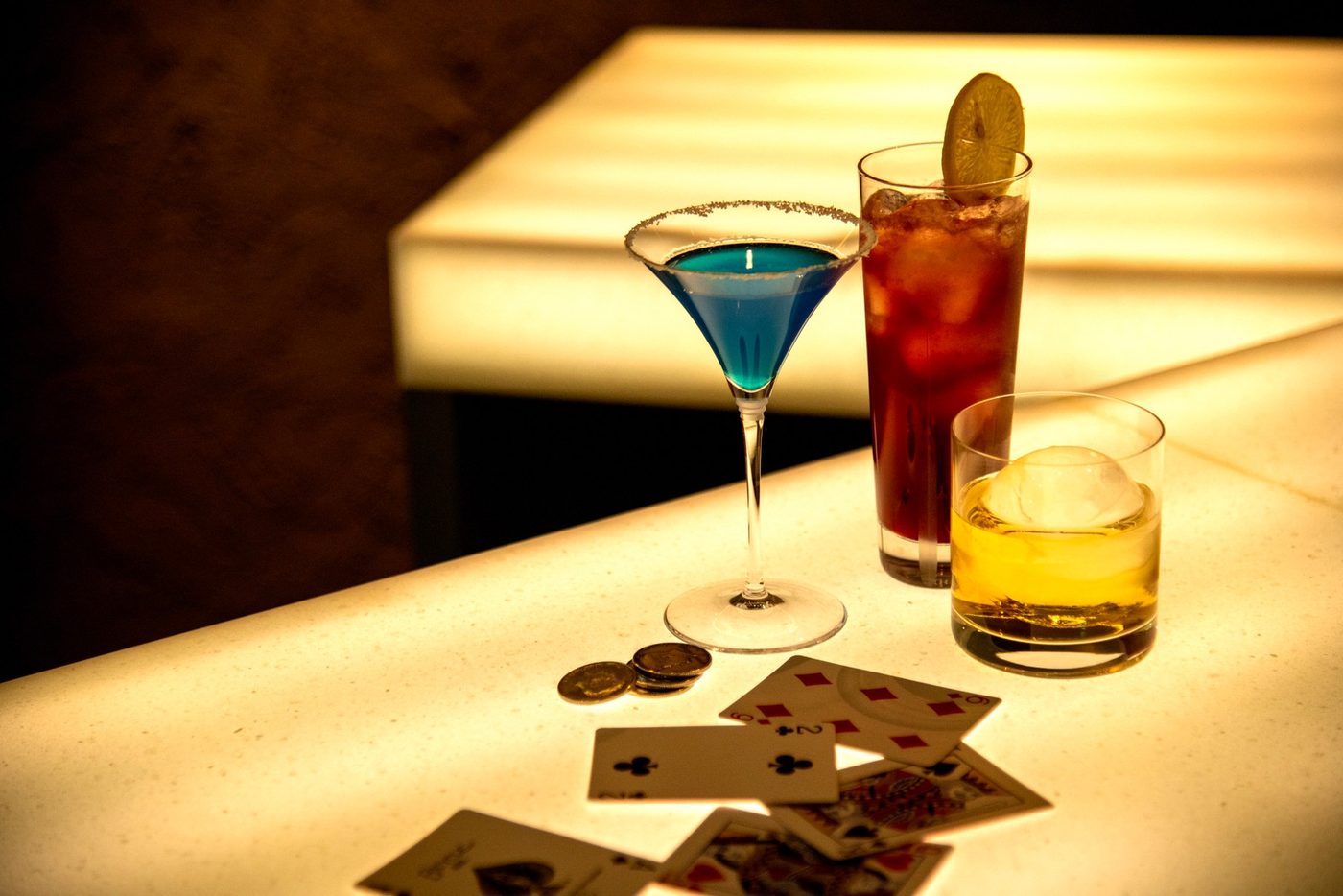
Among the many distinctly Japanese ways to spend an evening, few are as charming — or as little known to visitors — as the magic bar. The format is simple and intimate: a small, counter-focused bar where a professional magician performs close-up magic right in front of you, sometimes just an arm's length away, while you sip a craft cocktail. There is no distant stage and no vast crowd. The magic happens at your seat, with your own cards, your own coins, your own borrowed ring, so that the impossible unfolds inches from your hands.
It is a distinctly Japanese fusion of two traditions — the meticulous, hospitality-driven world of the Japanese bar counter, and the precision of close-up sleight of hand. The result feels less like a show and more like a conversation with someone who happens to bend reality between pouring drinks. You order, you chat, you watch a trick, you order again. The pacing is warm and unhurried, and because everything happens up close, every reaction is personal.
This intimate, small-room format fits Shibuya's current mood almost perfectly. As the district's nightlife has shifted away from cavernous clubs toward smaller 'ko-bako' venues that prize closeness over scale, an experience built entirely around a handful of guests at a counter feels right at home. For travelers who want something more memorable than another loud room, a magic bar offers exactly the kind of close, human, unmistakably Japanese night out that today's Tokyo does best.
Where the two crafts meet
BAR21 — Close-Up Magic Meets the Craft Cocktail
If the idea of close-up magic paired with a craft cocktail appeals to you, it is worth being honest about where Tokyo does it best. While Shibuya has no shortage of memorable nights out, the city's rare magic-and-cocktail fusion is BAR21, located in Roppongi rather than in Shibuya itself.
The good news is that Roppongi is only a short train ride from Shibuya, well within reach for anyone already exploring the west side of the city. If you have spent the day under the screens of the Scramble Crossing and want to cap the evening with something genuinely one-of-a-kind, BAR21 is an easy and rewarding detour.
Think of Shibuya as the perfect place to understand Tokyo's nightlife — its history, its music, its youthful energy — and BAR21 in Roppongi as the place to experience the magic-bar format at its finest. The trip across town is short, and for a night of close-up wonder and craft cocktails, it is well worth making.
Fresh stories on Tokyo nights, close-up magic and the city's best counters — in our magazine.
Read the Magazine →Area photo via Wikimedia Commons (CC BY / CC BY-SA)
Related Tokyo Night Experiences
Latest Shibuya Articles
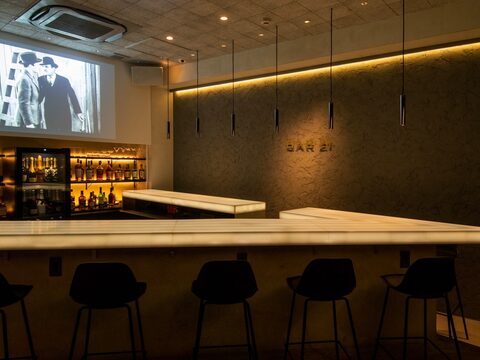 What To Do Magic Experience In Shibuya
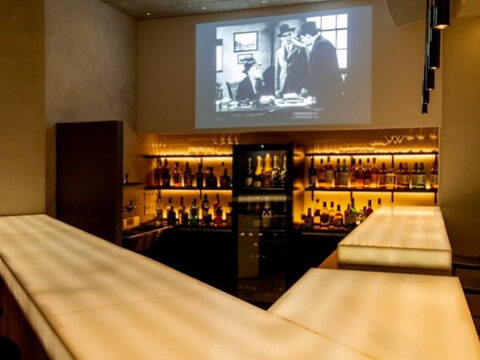 Best Magic Experience In Shibuya For Tourists Weekend Plan
 Late Night Close Up Magic In Shibuya For Solo Travelers Girls Night
 Things To Do Close Up Magic In Shibuya For After Dinner
 Interactive Magic Shibuya Surprise Foreigners
 Unique Magic Show Bar In Shibuya For Couples Anniversary
 Magic Experience Shibuya Weekend Plan Friends
 Illusion Show Shibuya Surprise Foreigners
What To Do Magic Show Bar In Shibuya For Couples First Date
Magician Bar Shibuya For Friends
Illusion Show Shibuya Surprise Foreigners
What To Do Magic Show Bar In Shibuya For Couples First Date
Magician Bar Shibuya For Friends
Browse all (26)
- Open Now Magic Experience In Shibuya For Couples
- Best Interactive Magic In Shibuya For Late Night
- Near Me Magic Experience In Shibuya For Solo Travelers Anniversary
- Experience Illusion Show In Shibuya For Solo Travelers Girls Night
- What To Do Magic Show Bar In Shibuya For Couples Late Night
- Late Night Magic Bar In Shibuya For Friends
- Best Magic Bar In Shibuya For Birthday
- Shibuya Nightlife
- Best Bars In Shibuya
- Popular Interactive Magic In Shibuya For Solo Travelers
- Top Magic Experience In Shibuya For Couples
- Experience Close Up Magic In Shibuya For Tourists
- Magic Experience Shibuya Girls Night Friends
- Magician Bar Shibuya After Dinner Foreigners
- Shibuya
- Best Magician Bar In Shibuya For Foreigners Girls Night
- Late Night Magician Bar In Shibuya For Friends
- Top Close Up Magic In Shibuya For Tourists Birthday
- Best Magic Show Bar In Shibuya For Solo Travelers Surprise
- Popular Close Up Magic In Shibuya For Tourists
- Near Me Magician Bar In Shibuya For Weekend Plan
- Unique Close Up Magic In Shibuya For Couples
- Near Me Illusion Show In Shibuya For Tourists
- Popular Magic Bar In Shibuya For Tourists Surprise
- Late Night Close Up Magic In Shibuya For Couples
- What To Do Close Up Magic In Shibuya For Tourists
Latest Articles
- BlogOct 19
- Popular Magician Bar In Shinjuku For Late NightOct 19
- Top Magic Experience In Tokyo Nightlife District For Late NightOct 12
- Best Magician Bar In Ginza For First DateOct 05
- Near Me Magic Experience In Shibuya For Solo Travelers AnniversarySep 28
- Things To Do Magic Bar In Tokyo Nightlife District For CouplesSep 21
- Late Night Magician Bar In Shibuya For FriendsSep 14
- Magic Show Bar Near Roppongi Station First Date ForeignersSep 07
- Late Night Close Up Magic In Shinjuku For ForeignersAug 31
- Near Me Magic Bar In Near Roppongi Station For Solo Travelers BirthdayAug 24
- Open Now Illusion Show In Roppongi For Foreigners After DinnerAug 17
- Magic Bar Ginza Girls Night Solo TravelersAug 10
- Best Magic Show Bar In Shibuya For Solo Travelers SurpriseAug 03
- Near Me Magic Show Bar In Tokyo For Late NightJul 27
- PreviewJul 20
- What To Do Close Up Magic In Tokyo Nightlife District For Weekend PlanJul 20
- What To Do Magic Experience In Near Roppongi Station For Couples After DinnerJul 13
- Unique Magic Show Bar In Shibuya For Couples AnniversaryJul 06
- ExperiencesJul 01
- Magician Bar Shinjuku First Date TouristsJun 29